Showing posts with label cross-selling. Show all posts

Thursday, October 24, 2013

Improving Bank Onboarding, Cross-Selling and Retention With Personalized Video

At a time when self-service banking models are replacing one-to-one interaction, personalized videos can provide a highly engaging and relevant communication option that can improve engagement, increase sales and reduce churn. 


Combining real-time data with highly customized content, marketers can turn big data insights into differentiated 'wow' experiences.


Online video is coming into its own, no longer being just an add-on component to institution's Web site. Partially due to the explosive growth of tablets, web videos have evolved beyond being used just for education or brand building to become a viable direct marketing messaging and selling tool, deserving of dedicated resources.

Online Content Booming


According to recently released data from comScore, 180 million U.S. Internet users watched almost 36.2 billion online videos in January of 2013. While the majority of these videos were for entertainment purposes, nearly 25 percent were promotional content, helping companies communicate with new and existing customers. In fact, video ads were the fastest growing category of online advertising in 2012, with U.S. spending increasing 46 percent to $2.9 billion.

More and more sophisticated viewers don't want to watch a repurposed 30-second TV spot on their computer, tablet or phone. They want online content that is personalized, compelling and interactive. "People are sitting viewing content online wanting to push a button -- give them a reason to push a button," said Jay Miletsky, CEO of online video network MyPod Studios in an interview with CMO.com. If done right, online video can be both a strong branding opportunity and an effective engagement tool.

A survey by Digitas found that 51 percent of online video viewers in the sought after 18 to 44 year old demographic would look up a new brand or product they saw on an online video, and 58 percent of 18 to 34 year olds who follow brands on social media would watch a video that a brand posted online. In addition, the just released Global Video Index : 2012 Year in Review conducted by video analytics provider Ooyala, found that while viewership differs between devices (desktop, tablet, mobile), the overall amount of viewing doubled in 2012.

Subscribe to Bank Marketing Strategies

Personalized Content Drives Engagement


At a time when video content viewership is rapidly increasing, the State of Online Video Report, published by SundaySky, found that personalization fosters significantly higher levels of viewer engagement. Specifically, short-form videos designed for communication to a mass audience (one-to-many product videos) are viewed with a 50 percent completion rate, while viewers will spend 2.5X more time watching a slightly longer video if the content is personally relevant to them.


The impact of videos has already been seen with email marketing, where it can increase the likelihood of having the email opened. While typical email opening rates can range from 11-22%, the addition of video can improve open rates to as high as 30%. According to SundaySky, open rates can increase to 40-60% if the content is personally relevant. Furthermore, the click-to-play rate for personalized video ranges from 80-99% according to the study. Additional KPIs of personalized videos include:

      • 4-8% increase in products per customer
      • 5-10% increase in revenue per customer
      • 20% reduction in churn rate
      • 30-50% lift in value-added service cross-sell rate
      • 5-20% increase in offer take rate
      • 80-94% positive experience rating
      • 5-10% lift in Net Promoter Score (NPS)


These results have not gone unnoticed. Forrester Research indicated in late 2012 that personalized videos are an important emerging technology that can combine big data and digital video content for deeper levels of customer engagement. Early adopters of personalized video include cable operators and telecommunications providers who are using this technology to deliver personalized video billings.

Humana also announced in late 2012 that they would be using personalized videos similar the example below to deliver a customized explanation of benefits to customers.


According to Kelly Ford, vice president of marketing for SundaySky, there are also a handful of 'first mover' financial institutions that are building personalized video solutions for their customers. "Several top U.S. banks, particularly in the credit card and lending businesses, are developing ways to increase engagement and educate customers using personalized videos," states Ford. "We expect many of these applications to go public in the next few months."

How Does Personalized Video Work?


Today, more than 80 percent of online video ads are simply repurposed television campaigns that are either available on demand or included within other forms of communication (email, jump pages, etc.). Going forward, however, it is possible to economically leverage behavioral, transactional and relationship insights to 'build' 1:1 video experiences that are personalized, real-time, measurable and optimized through ongoing analytics.

By addressing the viewer by name, using 'just-in-time' contextual and behavioral insight, an engagement communication, cross-sell message or important retention offer can be delivered to a desktop or mobile device even reflecting the device and time of day the message is consumed.


As shown above and in an available video, in the case of SundaySky, personalized and non-personalized data are integrated and served to a video template system called Videolets™. These Videolets leverage the data, logic, creative, channel and analytics to optimize the delivery of the message to the customer.

Individual scenes and personalization assets are selected for each customer in real time and these are populated along with any animation, custom voiceovers and interactive call to action overlays. This process allows for customization on the personal level that is scalable to the millions.

The resulting videos are also responsive to various delivery methods including websites, email, social networks, mobile devices and even SMS to take advantage of customer or institution preferences. And since the video is created at the moment the viewer clicks 'play', it ensures that the viewer is receiving the most recent and relevant information pertaining to their own relationship with the institution. The platform even gathers and analyzes viewer behavior in real time allowing for immediate analytics and performance optimization.


Financial Institution Customer Lifecycle Applications


At a time when the traditional economics of banking have been forever altered, it is important for financial institutions to embrace the 'New Normal' and look for opportunities that will leverage data and digital technology to improve results at every stage of the customer lifecycle. This will require new ways to engage with customers who are being encouraged to use online and mobile tools as opposed to visiting branches. 

Personalized online video provides a solution that can boost online search engine results, increase engagement, improve cross-selling and reduce churn thereby improving customer base growth, share of wallet and revenues. While the technology is still in its infancy, the potential should be evaluated along with other digital marketing strategies.

New Customer Acquisition

For financial institutions that are already leveraging Search Engine Optimization (SEO) strategies for generating prospect inquiries and new customers, video is the fastest growing format. This is because Google favors pages and sites that include videos. In a recent report, Forrester found that video results on Google have a 50X better chance of appearing first on results lists compared to text-based sites.

However, simply adding videos to a website or email is only the first step. Google and YouTube are always changing their search algorithms for video (and everything else), seeking the best way to present information that searchers find relevent. In October, YouTube announced that they would rank videos based on 'watch time,' giving prominence to videos that are watched for a longer stretch of time than just a few seconds.

As Google, YouTube and others continue to tinker with their search algorithms, it will be important to continually test your marketing efforts to ensure your placement is where you want it to be as changes happen.

It was also found that click through rates were significantly higher for video links than for text links. One reason was because a video thumbnail appears in the search results, providing greater real estate as well as attracting eyes to the results. Bottom line, including video helps brands to get found online. Digital video technology allows for extensive customization of the video based on product search criteria, including features and benefits.

Digital Retargeting

As discussed in my 2012 blog post on retargeting, banks can no longer afford to have website visitors or online shoppers abandon their search or account opening process without converting the visit to a sale. With more than 95% of website visitors and 50% of prospects who begin an online account opening not resulting in new business, reconnecting and reengaging with these site abandoners is a very worthwhile investment. According to eMarketer, retargeting can increase website visits by 726 percent, with retargeted consumers being 70 percent more likely to complete a sale than other visitors.


Videos personalized based on the shoppers initial search and behavior while on the bank's website takes retargeting a step beyond simply sending a broad product message. Since the retargeting efforts are personally relevant to the prospect's search, there is an improvement in site visits (up to 20% more), conversion (up to 10% more) and spend levels (up to 30% more). 

New Customer Onboarding

No matter what product or service a customer buys from your institution, the likelihood of the customer actively using the product and making your product their primary relationship is determined in the first 90-120 days of the relationship. As referenced many times within the Bank Marketing Strategy blog, as much as 40% of the new accounts opened can be lost in the first year, with many of the relationships established being inactive and unprofitable. 

While there are still many banks that are not doing the 'basics' of onboarding a new customer such as sending a 'thank you' email or direct mail letter that discusses how to use the new service and expand their relationship with the bank, a personalized video would be an excellent way to educate the customer about their specific account. This custom video could outline additional elements of the relationship they may be receiving (cards, PIN numbers, checks, etc.), explain how online banking, mobile banking and bill pay work, provide pertinent contact information and give insight into how to maximize the value of the relationship. 

An example of the way this could be done for insurance is provided below. As can be seen, the ability to customize both the audio and video content is extensive, allowing for an unexpected and pleasant new customer 'first touch'.


Some financial organizations are even pursuing using personalized videos to deliver statements as shown in the example below. Again, the level of real time personalization is possible by connecting customer behavioral and transactional insights with digital video content.


Cross-Selling

Ever since I entered the financial services industry (much) more than two decades ago, cross-selling has been the focal point of a great deal of employee training and marketing investment. It has also been the focus of several Bank Marketing Strategy blog posts due to the potential impact on revenues. With the banking standard of excellence usually considered to be Wells Fargo, with a cross-sell rate of 5.9 products, and with an average household having roughly 16 financial relationships, the objective of every financial institution is to have the greatest 'share of wallet' possible.

While many organizations already have lifestage and event triggers and programmed cross-sell initiatives built into their marketing communication strategies, the ability to leverage highly personalized videos to support current direct mail, email and online communication can only improve results. With the majority of the foundation already set through the development of targeting models, the ability to engage customers in a contextualized manner is a logical next step.


Retention

As the industry saying goes, "It costs 5 times more to acquire a new customer than to retain a current customer." Unfortunately, we sometimes forget those households that provide the highest value until they have either indicated a problem or have already left the bank. As a result, many financial institutions have built rewards and even recapture programs to reduce churn and extend customer lifetime value.

Different forms of loyalty programs include points-based programs as well as merchant-funded rewards. While both usually include the offering of merchandise or discounts, the value of these programs is based on the redemption rate as opposed to the earning rate of rewards. Until the reward is redeemed, the value to the customer is minimal.

Engaging customer in a contextualized manner allows a bank to both show that they understand who the customer is (based on their profile with the bank) as well as what the customer's interests may be (based on purchases). The result is a loyalty communication process that integrates the value of their reward available with an offer based on the customer persona.

As can be seen, the potential use of personalized videos is limited only by a marketer's imagination. While the majority of development in the financial services industry at this time is around onboarding, video statements as well as share of wallet build and retention, there are even some institutions looking into the possibility of using this technology for dispute reviews and dispute status updates.

"There is really no limit to the possibilities of personal videos to support engagement along the entire customer lifecycle, especially with industries like banking where the nurturing of a relationship is ongoing", states SundaySky's Kelly Ford. "The ability to have video engagement on Day 1, Day 7, Day 60 and thereafter that is entirely different, leveraging the latest insight into the customer's behavior, relationship growth and preferred channel of receiving the message is exciting."

Potential Roadblocks


Not surprisingly, the primary challenge for most financial institutions around evaluating and potentially implementing this or any digital marketing solution is centered on prioritization of initiatives. With so many pressures on most bank marketing departments, finding time to pursue a new technology or innovative process is difficult.

While compliance, privacy and security are always concerns for financial organizations, since the videos are encrypted, do not include account numbers and are served in real time, many of these challenges have been addressed.

When SundaySky was asked about primary competition to their service, Kelly Ford said, "At this time, for most financial organizations we have talked to, the alternative to personalized videos is 'do nothing', which is because of competing priorities".

Given the need for revenues and importance of aggressively attracting and retaining customers, it is likely that 'do nothing' will not be an alternative for long.


Additional Resources


2012 Global Video Index : Ooyala (February 2013)

Emerging Technologies for CMOs to Watch : Forrester Research (August 2012)

The Future of SmartVideo Advertising : SundaySky (August 2012)

FreeWheel Video Monetization Report - Freewheel (February 2013)

Wednesday, October 23, 2013

Essential Online Channel Metrics For Financial Marketers


With evolving technologies and platforms, financial marketers need a clear and comprehensive set of metrics to determine the effectiveness of their online channel. 


Instead of drowning in data and not being able to connect the dots in a meaningful way, here are four metrics that rise to the top and provide the clearest picture as to the selling power of a bank or credit union website.


By Melanie Friedrichs, Analyst for Andera, Inc.

In the Wild Wild West atmosphere of the early internet era, companies raced to slap websites online without thinking too hard about what purpose their website should ultimately serve.  Consumer retail companies found their ROI in online shopping, and their websites gradually evolved to draw visitors in and drive them to checkout.  In contrast, financial institutions focused on expanding eServices, until their websites became little more than portals to online banking. 

In the last few years, we’ve seen institutions start to wise up to a second, essential function of the online channel.  As Joe Swatek from ACTON Marketing said, “Your website has an important SALES function.”  Technology has made it possible for financial institutions to acquire new customers and members and grow relationships completely digitally, and like consumer retail websites aim to sell consumer products, financial institution websites should aim to open new deposit accounts and originate loans.  When thinking about the account opening and lending through the online channel, there are four essential metrics that financial institutions should consider:

1)      Conversion Rate


The single most important metric for a financial institution website is its conversion rate, or the percentage of qualified  unique visitors that begin applications for deposit or loan products.

Before the introduction of online account opening and lending, financial institutions focused primarily on making online banking login as easy as possible, and on providing key corporate information.  The rest of the website really didn’t matter that much, so webmasters cluttered pages with news items and product advertisements from different departments.  Over time, most financial institution websites began to resemble ill-managed community bulletin boards.


Unfortunately, bulletin boards don’t convert particularly well.  For one, the paradox of choice applies: when there are hundreds of calls to action, and no one call to action is emphasized over the others, most site visitors won’t answer any call to action at all.   This principle has been proved again and again in consumer retail.  What’s more, most financial institutions do a surprisingly poor job of emphasizing product benefits, and many hide or leave out essential rate information. For more resources on website optimization for conversion see here, here and here.

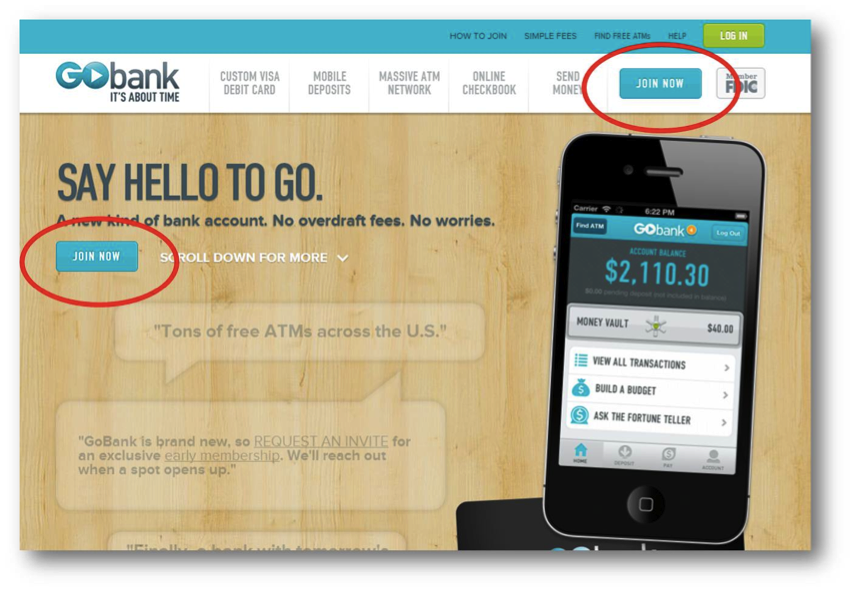
Not surprisingly, online-only banks tend to have conversion-focus websites. Three great examples are MovenGoBank, and Perkstreet Financial. All three have simple, almost spare websites that emphasize benefits and that drive visitors toward their application button.


Some institutions have ironically invested the time and money to optimize their website, but they don’t allow site visitors to sign up online, and direct them instead to a paper application, ask them to visit a branch, or ask them to phone into a call center.  Certainly, some consumers like to compare rates and products on the internet but ultimately want to open their new accounts by talking to a human directly, but in today’s online-centric world, institutions that don’t let consumers complete the process online are leaving money on the table.

2)      Abandonment Rate


The second most important metric that financial institutions should track is their abandonment rate, or the percentage of started applications that are never submitted because the applicant abandoned the process

Checkout abandonment is a much studied topic in consumer retail, and generally the experts agree on one thing: a shorter process is better.  Amazon, at the extreme, features one click purchases. Unfortunately applying for financial products requires many steps to satisfy Know Your Customer (KYC) regulations and comply with disclosure and fair practice requirements.  You will likely never be able to apply for a checking account with one click. Clients on Andera’s legacy platform on average saw between 70-80% of applicants drop-off from start to submit, compared to an average of 60-70% in consumer retail checkout.  In addition, around 10-30% of submitted, approved applicants never open accounts because they fail to complete the final few steps.  Institutions should look at both numbers.  The chart below shows application drop-off by page from start to submit, aggregated across 26 clients on the Andera Legacy online account opening platform.


That said, there is a lot that financial institutions (or their vendors) can do to make account and loan applications a faster and easier process. When it comes to workflow design, a good user experience designer is worth his/her weight in gold. Things like page order, help text syntax, and field groupings and labels can make the difference between a completed application and a frustrated, confused, abandoner.  PNC created a winning application for their virtual wallet product in 2010 by teaming up with IDEO’s expert designers and Andera.  Our next generation platform, oFlows, is helping us make that type of experience available for all institutions.


Online account opening and lending can also create what I like to think of as ‘break downs.” Imagine that you’re test driving a luxury vehicle; the seats are roomy and comfortable, the steering is smooth, and the suspension is fantastic, so even though the road is bumpy, you don’t feel a thing. Then suddenly, the car breaks down, and you have to wait for three hours for a mechanic to come and fix it. Would you buy the car?

There are three main ways a deposit account or loan application can break down to spike abandonment rates:

  • Identity Verification Failure: Data-based identity verification systems often can’t find matches for applicants with thin credit files, and around 10-20% of matched applicants fail the out-of-wallet questions required to confirm they are who they say they are. The best systems will use alternative data to reduce IDV failures, and for those who do fail, they will make it easy to upload a photo ID for manual review. Ally’s otherwise first-class ride broke down in this way.
  • Challenge Deposit Wait Time: Financial institutions who allow funding via ACH often require applicants to verify their bank account with challenge or trial deposits. Unfortunately, challenge deposits don’t appear in the applicants bank account right away, and even if they did, verifying them would still require the applicant to navigate away from the application, login to a different system, locate the appropriate information, and return. 
  • Signature Card Mail or Fax Requirement: e-Signatures were legalized back in 2000, but many financial institutions still require applicants to fill out and mail in a “signature card” so they’ll have a copy of a physical signature on hand to compare to later checks. This is not a necessary step (many of our clients don’t require signature cards), and the cost (abandonment) is becoming less and less justifiable as check use continues to decline.  Read more here.


The three causes of “break down” and high abandonment rates are not easy to eliminate. Solving the IDV problem usually requires additional investment from the institution, either in alternative data integration or a solution that easily allows photo upload. ACH funding is cheaper for institutions than credit/debit funding, and less vulnerable to certain types of fraud. As noted, physical signatures can also help reduce the risk of fraud.  We believe that in all three cases, the incremental risk or investment isn’t worth losing applicants to abandonment.

It’s difficult to compare abandonment rates across institutions, because every institution attracts slightly different applicants and every institution has slightly different products. But abandonment is definitely something that financial institutions need to pay attention to. A small decrease in abandonment can mean hundreds of new customers or members a year. For more on abandonment, check out Andera’s report on the “7 Reasons Applicants Quit.” 

3) Cross-Sell Rate


The third important metric is the cross-sell rate.

Online account opening and lending has made it easier for banks and credit unions to acquire new customers and members, but it also has made it easier to lose them. Open a checking account for a consumer, and they don’t have much incentive to stick around. Annoy a savvy online shopper once, and he or she can switch institutions in about half an hour from their dining room table.  Open a checking account and a seven-year CD for a consumer,and bam, that relationship just got a whole lot stickier.

A good online application will incorporate an automated cross-sell step that presents applicants with pre-approved offers for deposit and loan products, and allow applicants to apply for all products they select using a single application.  Andera’s oFlows platform makes cross-sell offers as early as possible, to increase the likelihood that applicants will consider and accept the offer (towards the end of the process applicants have less patience, and may misunderstand the offer, thinking that it will require them to start a new application).

The paradox of choice also applies to cross-sell offers. Applicants usually aren’t looking to take out a new auto loan, refinance their mortgage, and open five different types of savings accounts the first time they apply, and presenting offers for all of those products might overwhelm them. (Bank of America is an offender on this point).   Our clients have found great success with targeted offers for one or two products, usually a savings account and/or a credit card. 


4) User Experience


The fourth metric is not a concrete metric like conversion, abandonment, and cross-sell.  It’s not something that you can calculate and report on monthly for your executive board. But of the four, it’s probably the most important.

For customers and members acquired through the online channel, your website and application are the first impression of your financial institution.  It doesn’t matter how friendly, concerned, and helpful your staff are, or how accessible and comfortable your branches are, or even how great your rates are; if new customers/members have a terrible user experience opening an account, they’ll start off with a terrible opinion of your bank.

Innovative new institutions that offer “neo-checking” accounts, as Ron Shevlin calls them, can’t compete with established institutions on product variety, branch network, or raw manpower.  But because of careful attention to the details and an emphasis on user-centric design, they’ve created thousands of brand advocates who spread their praise through established media, through blogs, twitter and facebook, and through good old-fashioned word of mouth.
Listen to what your customers and members are saying about your institution. Survey them on their experiences online to learn what you can do better. Make sure someone at your institution owns the user experience, and invest in new personnel if necessary. Banking is changing, and at the end of the day, user experience will matter most.  

Conclusion


Bank and credit union marketing has come a long way in the last few years, but we still see too many institutions who are stuck in 3-6-3 thinking and expect new customers to just walk in the door. To succeed in an increasingly competitive environment, banks and credit unions need to become savvy online marketers, and focus on the metrics that matter.  In this post I have focused on the subset of the funnel from site visit to submit, and not on activities further up, including institution brand awareness and total website traffic, or further down, including application approval rate. 

For more tips on optimizing the online channel, check out Andera's free webinars and whitepapers as well as additional posts on The Andera Blog.


About the Author


Melanie Friedrichs is an analyst for Andera, Inc, is the leading provider of online account opening and lending solutions for banks and credit unions in the US. Melanie is a 2012 Venture for America fellow and a graduate of Brown University. She writes about innovation and marketing in retail banking for The Andera Blog, and contributes posts to Bank Innovation and BankNXT.  Melanie is based in Providence, Rhode Island.


Subscribe to Bank Marketing Strategy Via Email


Tuesday, October 22, 2013

Banks and Credit Unions Must Improve Cross-Selling Efforts

Despite the fact that banks and credit unions have talked about the importance of cross-selling for decades, few institutions have a disciplined process to take advantage of cross-selling opportunities that can grow operating revenue from existing customers. 


For those organizations that do have a process in place, studies show that many are not targeting the offers to reflect insights readily available, thereby annoying some of the best customers.


Outside of an improved interest rate spread (which is unlikely in the foreseeable future), banks can only create revenue by adding new customers or by deepening existing relationships. At a time when competition for new customers has never been greater from both traditional and non-traditional players, the only sustainable opportunity is to sell more to the customers a bank or credit union already has.

While the findings differ a bit by study, research shows that U.S. adults own between 8-12 financial products each, with ownership of services increasing with age (until age 54), by channel (online users have more products) and by type or institution (credit unions and smaller banks do better cross-selling).

Forrester: North American Technographics Benchmark Survey, 2009


Forrester: North American Technographics Benchmark Survey, 2009

While the number of products held by a typical household hovers around 10, most customers only hold 2-3 services at any one institution. Only the very best organizations sell more than four services to any one customer (not including 'go with' services such as debit cards). How can banks improve their penetration within their current customer base?
Subscribe to Bank Marketing Strategies

Sources of Sales


According to the most recent Gallup U.S. Retail Banking Survey, which asked 9,000 financial service customers how they engage with their bank when they purchase a product or service, one in every five customers opened a new account or signed up for a new service from their bank in the last six months. The vast majority of these sales (59%) came from customer already planning to open an account or buy a new service (the bank did not need to do any marketing to these customers since they were going to take this action without any selling).

The rest of the potential customers include 1) those who were considering opening an account but needed additional prompting (33%), and 2) those who were not considering opening an account, but did so with some prompting (8%).

Source: 2013 Gallup U.S. Retail Banking Survey 

What is important about the 33% of customers who are considering buying a product, but hesitate until they receive something from the bank or are talked to, is that the bank that 'wins' is usually the bank that understands the timing of the decision, has the best relationship and knows the offer that will best resonate with the potential buyer.

Not to be ignored are the 13% of the customers who Gallup found at one time considered buying an additional product or service at the bank, but opted not to do so. These are lost opportunities as well.

Gallup also found that customers who are 'fully engaged' with a financial institution are much more likely to buy an additional product from the bank or credit union than those who are just 'satisfied'. This makes sense when you consider that a customer could be very satisfied with a financial institution that they have an account with but don't do much with the account (mortgage only customers, CD customers without checking accounts, etc.).

For example, while less than 45% of 'satisfied' households surveyed by Gallup said they would consider their bank or credit union the next time they needed a product or service, that consideration increased to 83% among customers who were both satisfied and 'engaged'. In fact, customers who are engaged said they were more likely to open a new account, add ancillary products and services and/or obtain planning advice than those customers who are just satisfied.

Source: 2013 Gallup U.S. Retail Banking Survey

The Buying Process


As has been discussed in several other research studies in the past couple years, banking and credit union customers do a significant amount of research before purchasing a product or service. In the Gallup research, it was found that more than half of the customers considering buying a new product seek out information prior to the time of purchase. In fact, the research found that customers who looked for information had a 17% lift in eventual sales conversion rates.

The key for financial institutions is to identify the most influential information sources for converting the 'pondering' customer to being a 'sold' customer. Not surprisingly, the Gallup research found that social media was the most effective channel used by customers that lead to a sales conversion. What may be a surprise to many is that written material (direct mail and email) was the second most effective selling tool for banks and credit unions.

Source: 2013 Gallup U.S. Retail Banking Survey

Interestingly, the channels with the highest cost to the bank (speaking to someone in the branch or a customer service representative over the phone) provided a relatively smaller lift in sales conversion even though they are primary sources of information for potential customers.

The requirement for banks and credit unions to manage multiple communication channels to effectively and efficiently move potential customers through the sales funnel is a difficult challenge. Gallup believes financial marketers should ask themselves the following questions as they allocate resources.
      • Do we know where our customers, specifically, are looking for information prior to purchasing?
      • Are we delivering a consistent message across sales information channels?
      • How do we balance our resources between those channels that are high impact in conversion but low in usage (i.e. social media) vs. those that are high in usage but have lower impact in conversation (i.e. spoke to someone in a branch)?
      • Do we know what our customers value in a bank and are we delivering on the message at every touch point?
      • Do we know what actions we need to take to increase conversion rates in each channel?

Improving The Cross-Sell Process


While what qualifies as a 'cross-sell' may differ between financial organizations, the cross-sell ratio is still the number of products and services sold divided by the number of customers (or households). The key to boosting the ratio is to accelerate the rate and effectiveness of sales conversations. While I have covered some ideas around cross-selling in previous Bank Marketing Strategy posts (here, here, here and here), Gallup provided some great insights into how to improve cross-selling effectiveness.

1. Define and measure cross-selling: As I mentioned above, there are many ways to define products or customers as it relates to cross-selling. Since there are no industry standards, it is difficult to compare different institutions. It is not difficult to set a definition for your bank, however. The primary decisions are whether to include 'go with' services within the product category (debit card, online banking, mobile banking, bill pay, direct deposit, etc) and whether a cross-sell ratio includes only retail banking products and customers/households or small business, investment services and commercial customers/products as well. The key is to keep the measurement within your organization consistent and meaningful.

2. Analyze the drivers of cross-selling: How is your organization's cross-selling ratio trending over time? What is impacting your cross-selling trend? Your trend is most likely impacted by the following:
      • New customer acquisition: As new customers are acquired, the cross-sell ratio decreases if your team is not cross-selling new customers at or above the current cross-sell rate.
      • New customer cross-selling: There is no more important time to cross-sell than during the onboarding process. If your institution does not have a multichannel, onboarding process with multiple 'touches', new customer acquisition is probably negatively impacting your cross-selling ratio.
      • Existing customer attrition: Attrition of established relationships due to moves, etc. can negatively impact your cross-sell ratio if the relationship is not replaced with a similarly strong engagement. On the other hand, the culling of low engagement, single service relationships can dramatically improve your cross-sell ratio.
      • Existing customer cross-selling: Building a proactive, targeted and consistent cross-selling strategy can improve your cross-sell ratio over time and set the stage for improved revenues and lower attrition (customers with more services are less likely to attrite).
3. Build the cross-sell message into your vision and values: Cross-selling requires more than lip service. To be effective, senior management must embrace and continuously communicate to importance of cross-selling to both the bank and the customer. It should be published, posted, presented and reinforced continuously both within the bank and to the general public. Wells Fargo has made cross-selling part of their internal mission statement and vision for more than a decade. It is posted for their employees and is made public on their web site and presented as part of every investor meeting (see Wells Fargo case study below).

4. Provide metrics for employees to measure performance: Building an employee measurement and performance component to your cross-sell process is imperative to success since employee engagement is required for cross-selling to be effective. Setting standards for employees on a customer level will improve cross-selling and ultimately increase revenues.  

5. Identify and share branch level best practices: When measurement is done on a branch and regional level, causes of variations begin to become clear. While some of the variations are out of a branch's control (market differences, branch location, etc.), other variations are caused by controllable factors such as leadership, employee engagement, training, etc. It is important to find 'success stories' and share them across the organization to improve results across the board.

6. Improve the cross-sell communication process: As can be expected, the effectiveness of any cross-sell process depends on the quality of customer communication through every channel. This obviously includes improving the employee-customer engagement but also includes every marketing engagement with the customer through all channels.

Unfortunately, according to the Gallup study, financial marketers could definitely improve cross-sell communications with current customers. Sixty-six percent of 'fully engaged' customers felt the offers they receive are 'general' in nature, 41% found the offer annoying, and stunningly, 53% of customers already had the product being promoted (Ouch!). Of significant concern is that the most engaged customers (the ones most likely to buy) felt they were targeted worse than those who were less engaged.

Source: 2013 Gallup U.S. Retail Banking Survey


Gallup suggested several keys to making your cross-sell marketing program more effective:
      • Identify the most engaged customers (accounts held, transactions made, etc.) and review the products already held with your institution
      • Model the best relationships as the foundation for building similar relationships with less engaged households
      • Make product recommendations based on event-triggers, account ownership trends, market changes, etc. Increase insight gathering from customers to improve this process.
      • Make sure marketing offers are customized based on the customer relationship regardless of channel being used for marketing (provide flexibility to employees and personalize all marketing communication).
      • Leverage analytics on previous behaviors on the customer/household level to improve targeting, timing and offer selection.
7. Implement a short-cycle sales management process: Promote an environment that cultivates immediacy, focus and continuous improvement through daily huddles, short term result monitoring (weekly as opposed to quarterly). Breaking down major initiatives into 'bite sized' portions makes the accomplishment of major goals palatable on the individual level and promotes team engagement. Both actions and outcomes should be broken down in this manner. Commitments from individuals and teams are easier to measure as well.

8. Recognize and reward: Simplicity and frequency are the key. Most financial institutions over-complicate recognition and incentives, diluting the potential impact of the program. All activities and behaviors that drive cross-selling should be recognized and rewarded. Money may not be the only reward either. Sometimes recognition can be just as impactful, especially for shorter term accomplishments.

Improving cross-selling is difficult to do and even more difficult to maintain over time. Since returns on investment are sometimes slower and more incremental than major product promotions, financial institutions often place cross-sell initiatives further back on the burner or give these initiatives less attention. This has been seen with onboarding and event-trigger programs that represent 'easy money' once implemented.

Unfortunately, given the current rate and revenue environment, banks and credit unions can no longer implement cross-sell programs as a short-term focus or miss opportunities that are there for the taking on a daily basis. All marketing channels need to focus on selling current customers the right product, at the right time, through the right channel leveraging the insight we have on each individual customer.

If we don't, our competitors will.

Case Study of Financial Cross-Sell Success: Wells Fargo


Wells Fargo's obsession with cross-selling is legendary and starts at the top of the organization. The vision of the bank is that service and salesmanship are at the core of how the bank can continue to be successful and that if silos within the bank are broken down, cross-selling will flourish.

As opposed to just saying cross-selling is important, however, senior management continues to make this effort a primary focus of the bank and goes out of its way to show the value of cross-selling for both the bank and the customer. 

In fact, within the published vision of the bank that is available on the Wells Fargo web site is the bank's published strategy around cross-selling which illustrates the connection of value to the customer:
"The core of our vision-based strategy is 'cross-selling'— the process of offering customers the products and services they need, when they need them, to help them succeed financially. The more we give our customers what they need, the more we know about them. The more we know about their financial needs, the easier it is for us to work together for them to bring us more of their business. The more business they do with us, the better value they receive and the more loyal they become. The longer they stay with us, the more opportunities we have to satisfy even more of their financial needs. That’s the mutual benefit of cross-sell."
In a presentation at the 2013 Citi Financial Services Conference, Senior EVP and CFO Tim Sloan reinforced this overarching strategy and showed that Wells Fargo continues to achieve industry leading cross-sell rates, with their average customer having 6 products at the bank and their top region approaching a cross-sell rate of 8 products per household.


Source: Wells Fargo Investor Presentation at Citi Financial Services Conference (March 2013)

According to Sloan, "We've remained focused and have continued to grow cross-sell across our business lines. We have successfully grown cross-sell in our retail bank overall, and as tenure with the bank increases, the customer has more products with us. But, we also have many opportunities to continue to grow cross-sell with our average customer as we look at the potential of the average household." (note: Wells Fargo includes 'go with' services in their cross-sell measurements)

Source: Wells Fargo Investor Presentation at Citi Financial Services Conference (March 2013)

Sloan continued in his Investor Day comments, "We believe we can continue to grow cross-selling because we have many opportunities to increase penetration across our product lines. For instance, we've continued to increase the penetration of certain consumer lending products in our retail household base since last year's Investor Day. In particular, we've had great success in our credit card area, with new credit card account penetration increasing to 33% of our retail household base. Despite this success, we believe the penetration is still too low."

Source: Wells Fargo Investor Presentation at Citi Financial Services Conference (March 2013)

Wells Fargo's commitment to cross-selling extends beyond the retail customer base and is measured in the Wholesale Banking, Investment Banking, and Wealth, Brokerage and Retirement (WBR) areas of the bank. The impact of this cross-sell focus is that fees at Wells Fargo continue to grow in all areas of the bank as new relationships are established and current relationships are expanded.

Source: Wells Fargo Investor Presentation at Citi Financial Services Conference (March 2013)

Wells continues to improve cross-selling without being the lowest cost option in the marketplace. According to Sloan, it is because the people on the front line are focused first on building the overall customer relationship.

Here is a direct quote from his Investor Day presentation:

"You don't build long-term sustainable value to shareholders by just being the lowest price option, you have to offer an entire relationship to a customer.
So when we go out, we want to win business. And sometimes to win the business in terms of providing credit for example, you have to be competitive on price. Sometimes that means you're lower, sometimes it means you're in the mix and sometimes you might be towards the higher end. But the reason that we've been able to demonstrate these returns, even if we are aren't very competitive on price is because we have a relationship focus and you've seen what we've been able to do in terms of broadening those relationships over time.
So when I was out on the line or when I think about pricing today, I don't think about it as, geez, this is the loan pricing. I think about what's the total relationship worth? And does it make sense to make some sort of investment to bring the business over so we can get the rest of the products and services over time without [tiring] obviously, but the rest of products and services over time and being able to grow that relationship. 

Because we have confidence in our team because they've been able to demonstrate to do that, that's an easy bet to make every day of the week."


Additional Resources


Solving The Cross-Sell Imperative In Financial Services - Forrester Research (September 2009)

Keys To Cross-Selling Success - BAI Banking Strategies (September 2011)