Showing posts with label customer insight. Show all posts

Thursday, November 14, 2013

Effective Onboarding Begins with Good Insight

In 2003, the BAI released a research study entitled, 'The Ninety Day Window of Opportunity', where interviews, deposit statistics and segmentation models revealed that nearly 75% of all cross-sell opportunities and the vast majority of attrition occurred in the first 90 days of a new customer relationship. These findings continue to be verified in the marketplace, with expanded concern recently around the lack of funding, engagement and use of new products by these new customers.

More than ever, financial institutions need to begin the onboarding process by capturing an accurate and robust view of the customer which can be used across the organization to enhance the customer experience and expand the relationship with the bank. In short, to optimize the customer experience during the first critical months and year of the relationship from both the customer's and bank's perspective, you need a 360 degree view of the customer. With online account openings, this process becomes even more critical.


Unfortunately, with so many data entry points and so much emphasis on operation efficiency and regulatory requirements, the capture of many key elements of customer insight gets overlooked or is done inconsistently by the front line. Beyond address, birth date, gender and identification information, financial institutions need to begin to collect insight such as email addresses, primary decision maker on the account (it is often the female in the household even though we usually address correspondences to the male), the preferred channel of communication (which is often email), the reason for coming to the bank (move, dissatisfaction, previously unbanked) and what services they use elsewhere (the holy grail of insight). Of course, with more and more of the collection process occurring online, organizations are under increased pressure to validate this insight (especially the address).

With this insight, you are in a much better position to communicate with the new customer in a personalized and relevant manner, using the right channels to the best person in the household offering a service or solution that is geared to their needs. These communications should begin on day one and continue throughout the early stages of the customer relationship enhancing the customer experience and increasing loyalty and retention. Multiple channels should be utilized to improve effectiveness and measurement of all touches should occur to gauge the ROI of the process.

Wednesday, November 13, 2013

Thinking Like Your Customer

Yesterday, I received a thought provoking Harvard Business Review blog from Scott Anthony, Managing Director of Innosight Ventures entitled, Think and Act Like Your Customers, where he discussed that many marketers surround themselves with what they produce as opposed to placing themselves in the position of a customer of their competition.

He pondered the fact that we may receive lots competitive intelligence from research decks and market studies, but we sometimes miss the simplest form of insight that can be derived by having our employees (or ourselves) use the products and services of the competition.


This got me thinking as to how often bank marketers actually open a new account at the competition as opposed to simply doing shopping studies with a third party research firm. How else can we really get a feel for the new account opening process, the insight collection and selling done on the front line, the subsequent onboarding communication process and the communication done later in the relationship?

As Scott Anthony pointed out, we should determine what the competition has that is better than our bank? How do they position or communicate their offerings that may be of interest to our customers? Most importantly, if you were not an employee of your bank, would the offering of the competitor encourage you to select the competition as being your bank of choice?

Sometimes, there is nothing better (or more frightening) than seeing the truth for yourself.

Tuesday, November 12, 2013

Cross-Selling is Key to Bank Revenue Growth

As the banking world is shifting from a supply-side, product-driven environment to a demand-driven one, the focal point of this new model is the customer. As a result, banks are going to need to change their operating models to adapt and align to this new reality. Only then can banks deliver a truly innovative and compelling customer experience.

Part of this transformation will be to develop key performance indicators (KPIs) that measure long-term performance such as loyalty as well as shorter-term measures such as cross-sell effectiveness, customer satisfaction and household profitability. With as much as 30% of the bank's customer base potentially being vulnerable and 'in play' according to an Accenture survey of banking customers, banks must commit the resources needed for actionable customer segmentation, new pricing models, needs-based solutions and a way to reach customers effectively and efficiently to grow relationships.


As returns on equity have dropped precipitously, banks are now focusing on cross-selling to replace some of their profits and solidify relationships. In a recent Bloomberg Businessweek article entitled, Wells Fargo Pushes Cross-Sales to Replace Lost Growth, David Henry and Dakin Campbell discuss how the emphasis on cross-selling (which is not new) could be more effective at many organizations today since acquisitions by many banks have added millions of new customers to sell. For instance, Bank of America is hoping to persuade its 12 million customers to move funds to their newly acquired Merrill Lynch or for the Merrill Lynch clients to use more bank services. In addition, Wells Fargo is focusing on improving cross-selling at its Wachovia branches, where customers average 4.85 products per household compared to the much higher historical average at Wells.

As Stephen Steinour, CEO of Huntington Bancshares, said in a recent interview with analysts when asked about the importance of cross-selling at his bank, "there are not a lot of options". In fact, as the focus of the lead story in the most recent U.S. Banker magazine entitled Back from the Brink, Steinour and his team place cross-selling as the top priority at the bank, with a new CRM system being installed, additional employees being hired, Sunday branch hours being introduced, marketing spending increased and new incentive and measurement plans being put into place to reward customer relationship growth performance.

A number of banks I visit and clients of our company across the country have integrated cross-sell initiatives into marketing programs done quarterly, monthly or even daily based on customer behavior and events. Unlike the product-push promotions of the past, these programs leverage the modeled needs of the customer and flexibility of digital print to deliver messages to the customer that are based on their product propensity and recent activity. So, instead of promoting equity credit in September, many banks will be promoting a wide range of their services to individual segments of their customer base most likely to respond at a given time. Many of these banks are also leveraging all available communication channels (direct mail, email, phone, online banking, etc.) to support these efforts.

The key in all of these initiatives will be to make sure cross-selling is done for the benefit of the customer as opposed to simply reaching desired metrics. As many banks found out in the past, profitability is not automatically enhanced with an additional product sale. The focus needs to be on finding the correct solution for customer's needs which, in turn, will lead to an expanded relationship in dollars, services, and share of wallet.

How is your bank balancing the investment in cross-selling vs. acquisition marketing? Has there been a shift to either strategy in the past couple years at your bank? How do you view the future of acquisition and cross-sales?

Monday, November 11, 2013

Responding to the Self-Directed Bank Customer

According to a soon to be published Accenture survey of senior banking executives from major banks across the world, there has been a significant power shift between banks and their customers that has resulted a lowering of customer profitability levels. The research entitled, Customer 2012: Time for a New Contract Between Banks and Their Customers?, found that nearly half of the executives have seen their average customer profitability decline by 5-15 percent since the beginning of the financial crisis.

According to Noel Gordon, global managing director of Accenture's banking practice and co-author of the research, “Consumers have emerged more confident in making financial decisions for themselves, more skeptical of their bank brands, more price-conscious and more willing to move away from institutions that provide poor service.
For the banks, traditional profit-recovery strategies – rate and fee increases, conventional cross-selling and organic growth – will not readily fix the problem because broader customer expectations and service demands have risen in the wake of the financial crisis.”

The vast majority of bank executives surveyed (83 percent) reported increased demand for “direct” services – online, telephone, and mobile – since the financial crisis, and nearly two-thirds (63 percent) believe that meeting those demands will be a major challenge for their companies in the next three years. What is interesting about the research is that nearly half of the bankers also cited that customers want more personalized services.

These traditionally conflicting customer desires of alternative channel access and increased personalization can only be addressed through the collection and application of enhanced customer insight including data from third parties, payment behavior, channel use tracking, customer preferences and survey data integrated across all lines of business and available to front-line employees. This insight needs to drive more sophisticated segmentation and intelligent interactions with the goal to 'pull customers' as opposed to 'pushing product'.

Accenture believes there are six strategies banks can use to foster stronger relationships:
  • Identify and understand customer behaviors and trends to continually evolve marketing and distribution strategy.
  • Provide interactive, targeted customer service while decreasing costs.
  • Leverage IT to provide personalized interactions.
  • Apply retailization tactics to foster experience-based loyalty.
  • Use transformative efficiency to reduce unit cost for customers, partners and suppliers.
  • Support the rapid evolution of business and operating models.
With decreased loyalty, increased price sensitivity and online capabilities that make switching financial providers easier than ever, only banks that can fully leverage customer data and enhanced analytics to deliver needs-based solutions will be in a position to reverse recent customer profitability declines.

How is your bank positioning itself to respond to the self-directed customer? What strategies are you using to capture and use transactional, behavioral and social insights? Are your marketing communication strategies changing? I would love to hear from you.

Friday, November 8, 2013

Ten Bank Marketer Resolutions for 2011

It is the dawning of a new year in banking with many of the same challenges that we saw in 2010. Our industry continues to be viewed in a less than positive light from both the consumer and small business marketplace. 


The need for new customer growth and share of wallet expansion underpins the need for new sources of non-interest fee income at a time when regulations are dramatically reducing many traditional sources of revenue. In addition, the expansion of transaction and communication channels are changing the ways we interact with customers. 


These challenges are combined with an historically low interest rate environment and a credit environment where there is a massive amount of money to lend at a time when borrowing is more difficult and less desirable for many.


According to a national survey, the majority of personal resolutions in 2011 will revolve around saving money, losing weight, changing a bad habit and being closer to loved ones. Achieving any of these goals will take commitment, focus and changes in behavior. The same can be said for the resolutions I have developed from traveling the country over the past few months and being involved in a number of banks' annual planning efforts.

Here are areas where bank marketers believe they should focus in 2011:


1. Replace Lost Fee Income
Nothing has impacted banking over the past 12-18 months or will impact banking in 2011 more than the loss of fee income caused by the combination of the Card Act, Reg. E, and the upcoming changes from the Durbin Amendment. Almost all other resolutions for the upcoming year are built to address this need. The role of bank marketers in achieving fee income replacement goals will include checking product restructuring and new fee-based product development, increasing card transactions, improving customer engagement and better resource allocation for results.

2. Improve the Customer Experience
Another overarching resolution similar to the personal resolution of being closer to loved ones, bank marketers need to view all of their initiatives using the lens of understanding customer's needs, looking out for customers and rewarding their relationship. In an environment of heightened scrutiny of how we are treating customers, it will be more important than ever to market to consumers and small businesses on a more personalized basis from the day they open their first account and to build a reward structure that reinforces our commitment to relationship retention and growth.

Subscribe to Bank Marketing Strategies

3. Focus on Incremental New Customer Growth
A new balance between quantity and quality of new accounts needs to be struck. With the elimination of Free Checking occurring at most banks I visit, new acquisition models need to be developed that take into account the new checking account continuum. Instead of generating as many accounts as possible, banks will be focusing on the potential value of relationships including the likelihood of engagement and retention. A premium will be paid for those households that will immediately contribute to the bottom line.

4. Gather Email Addresses
When presenting at the BAI Retail Delivery Conference this Fall, it amazed me that there were more banks that collected cell phone numbers than collected email addresses at the new account desk. I suppose this phenomenon may be caused by the combination of more households using a cell phone as opposed to a land line for home communication and the relative ease of having a bank's IT team build another phone field into the new account process as opposed to an email field. But with other communication channel cost increasing and the improved results achieved when email is combined with more traditional channels, the importance of collecting (and using) email addresses has never been more important. Some banks are even considering stand alone marketing initiatives to address this need in 2011.

5. Reduce Customer Attrition
At a time when the cost of acquiring a new customer exceeds $200 and the annual income potential from a new relationship is at least as high, banks can ill afford to accept first year attrition rates of 30-40%. Multichannel onboarding programs that encourage alternative channel use, enhanced services (such as online bill pay, automatic savings, privacy products, etc.) and increased transactions need to be leveraged to stop the massive outflow of accounts that occur early in the customer's lifecycle. Improved tracking of relationship diminishment and win-back programs will also be used to achieve this resolution.

6. Expand Share of Wallet Through Lifestage Marketing
To compensate for the increased difficulty of generating high value relationships, there needs to be a much greater focus on organic growth, including behavior based cross-selling and lifestage marketing. While the movement from product centricity to being customer-centric has been discussed for decades, the removal of product silos is no longer an option for those banks who are seeking optimal resource allocation. More banks than ever are investing in improved models and strategies for relationship growth which will improve both engagement levels and retention in the long term. New service introductions such as privacy protection and enhanced personal financial management (PFM) tools will further allow for relationship deepening in 2011.

7. Don't Confuse Channel Economy with Channel Efficiency
No communication channel is 'free'. While email may seem like a far less costly channel to use for reaching customers, the lack of clear targeting and message development may prove costly as customers opt-out of future communications or simply ignore email messages. In my experience within the banking industry, email has not proven to be as good of a replacement for channels like direct mail as it has been a good supplement for improved results. In 2011, banks will develop much better processes for measuring the incremental impact of alternative channel communication and will continue to expand communication channels to include mobile, ATMs, social media, etc.

8. Leverage Social Media Personally and Professionally
Social media channels definitely can be beneficial or a distraction. Not many of us have time for reading about someone else's dinner plans or personal political opinions on Twitter, yet Twitter can be a great source of timely financial industry or marketing insight and competitive research delivered in a very compact format to the desktop for consumption at a time and place desired. Banks have also realized that social channels need to be used differently in financial services than with retail or other industry verticals. As opposed to trying to find 'friends' of our brands, social media has been used most effectively for customer service (Twitter) and for the promotion of broad based public relations initiatives (Chase's very popular Community Giving Campaign). The coming year will be a year of expanded testing of these new channels for the banking industry. Unlike the past, however, investment in these channels will need to generate a tangible ROI.

9. Deliver On The Mobile Banking Promise
The opportunity to be a 'first mover' in the mobile banking marketplace is quickly closing as more and more financial organizations are introducing products that work on multiple platforms. Bank of America has found that their market leading mobile banking customer base has significantly less attrition than a customer without a mobile banking application. USAA has continued to push the envelope on ways to use the mobile phone for financial convenience including remote deposit capture, receiving auto insurance quotes, requesting proof of insurance cards, etc. While building a concrete business case for mobile banking may be challenging, the marketplace will eventually demand this channel for P2P payments, geolocational applications and even low cost banking alternatives. Next year will also see the first wave of iPad and Android tablet applications that go beyond minor adjustments to current phone applications and leverage the enhanced capabilities of the popular tablet hardware.

10. Reconfigure The Branch Bank Model
The most challenging resolution for 2011 may be the testing and development of new branch banking models in light of the shift in channel use by the consumer. As branches are increasingly used primarily for account openings and small business servicing, the physical and operational configuration of branch networks will need to be evaluated. But what will be the best model for the future? While Citibank introduced a refined branch model late last year similar to an Apple Store, Huntington Bank went in an opposite direction by expanding their branch network and increasing hours and days of operation. With such a significant investment in real estate and human resources to support branch operations, each bank will be testing a variety of options in the next few years with multiple configurations most likely winning based on specific market dynamics.
I am sure there are several more important resolutions that can be added to my list, but there are already more than many of us can handle. This will definitely challenge the ability to focus and to achieve meaningful results especially in an environment of continuous change. Similar to personal resolutions, however, we all need to start as soon as possible and focus our attention on those resolutions that have the greatest impact and opportunity for success.

Let me hear where you will be focusing your efforts in 2011.

Thursday, November 7, 2013

Minimizing the Impact of 'Unintended Consequences'

At the BAI Retail Delivery Conference in Boston in November of 2009, the overriding theme from major bank leaders, industry pundits and vendor partners to the financial services industry was the risk of 'unintended consequences' as a result of the yet to be implemented Reg E. There was the belief that, while the government was trying to protect people from excessive fees from overdrafts, there would be many consumers who would be negatively impacted as debit card transactions or ATM withdrawals were rejected. Based on a recent straw poll of many of the bankers I work with across the country, some of the same people the regulation was intended to 'protect' have been negatively impacted the most.

It has been almost 9 months since the implementation of Reg E, and the government has again created legislation that will have unintended consequences for a majority of bank customers. The still debated, but most likely to be implemented, Durbin Amendment to the Dodd-Frank banking bill will significantly lower the interchange income that banks can earn from debit transactions. In fact, many believe the impact could cause a reduction of 60-80% or more to this important non-interest income source.

Banks can't absorb this massive of a reduction in revenue without passing the costs on to the consumer in some form. On January 20 in an interview with the Los Angeles Times, Wells Fargo's Chairman, John Stumpf stated that new fees will need to replace those that are being eliminated. "We've begun to implement some changes," Stumpf said, apparently referring to a $5 monthly checking fee, imposed last July on new customers. "And there are more to come."


On the following day, Richard Davis from U.S. Bancorp echoed the sentiments of Wells Fargo, stating that they will soon will eliminate free checking and debit card rewards without strings attached, like minimum balances. At the same time, Chase and Bank of America are testing fees including a monthly fee for having a debit card, increased monthly checking fees and the elimination of rewards programs and free ATM usage.
So, how can bank marketers soften the impact of these fee adjustments and position new checking options in a more positive light?
  • Know Your Customers: Take time to evaluate your customer database and understand which accounts are profitable to your bank and which are under water. But don't stop there. You also need to understand the customer's entire relationship to evaluate the potential impact of your repricing decisions.
  • Look Out for Your Customers: Instead of converting a whole class of customers to a new pricing structure, you should determine which customers are no longer in the best account type based on balances, activity, relationship, etc. Over the past ten years, almost every customer was encouraged to open a Free Checking. Many of these customers will hold balances or conduct business in a manner that could retain their free status. For those who don't, provide clear guidance as to how they could retain a free or low cost alternative. Put yourself in the shoes of the customer and consult them as to the best way to bank with your institution.
  • Communicate With Your Customer: In the past, most checking pricing changes were communicated using a statement insert. Since most banks will be implementing significant changes to their checking product portfolio, it is better to leverage the segmentation and targeting potential of more direct media such as direct mail, email and phone calls. These channels provide the opportunity to build custom messages for customers to guide them to the best product in your new continuum. In addition, leverage as many channels as possible to reinforce the best strategy for the customer going forward.
  • Reward Your Customer: In almost every instance, there is the ability to structure your communication in a way that can reward positive customer behavior. While you may be eliminating the waiver of foreign ATM fees, can you reward the use of your ATMs? While you may be increasing the balances required to maintain minimal fees, can you reward the customer for selecting electronic statements? Finally, while you may be either charging for your rewards program going forward or eliminating the program for some categories of accounts, can you use points as a currency if the customer moves to a different category of account?
When I worked with a bank in Canada, we partnered with the bank to communicate significant checking account pricing changes on two different occasions. Each restructuring impacted the majority of the customer base. In both instances, we positioned the changes as a way to move many of the checking relationships into a better account for the customer and the bank. With clear and repeated communications, we not only increased balances by more than 10% overall, but retained more than 90% of the customers and minimized the number of customer service calls that needed to be handled.

How are you planning to communicate your changes to customers? Will there be unintended consequences from your communication? I'd love to hear from you.

Wednesday, November 6, 2013

Seven Steps to Reduce Offline and Online Bank Product Purchase Abandonment

According to Forrester Research, the number of consumers using the Web to research, buy and manage their financial products has grown steadily. In 2009, 63% of US online adults who researched a financial product did so online, with the number increasing over the past two years. Virtually all products were researched, from mortgages and student loans to savings and checking accounts. Interestingly, more than a third who researched products did so exclusively online.

The Web provides inherent advantages when researching and applying, including the convenience of being able to research whenever the user wants, the ease of comparing providers, and in some cases the ability to open the product or service in real time. While the use of the Web is correlated to age categories (with Gen Y using the Internet more frequently), all age groups are increasing their use of online and mobile channels to evaluate options before purchasing financial services.

Online purchase of financial services varies significantly by product type, with complexity and locational considerations driving the sales process. For instance, while almost half of online adults applied for a credit card online, a far lower percentage purchased a checking account online since convenience is a primary consideration, making the ability to walk into a branch to open an account more feasible.

Building awareness and even consideration online, however, does not guarantee the prospect will apply for or open their relationship online. According to a recent Forrester Research study entitled, Injecting Next-Generation Thinking Into Your Financial Services Acquisition Website, almost 40% of online households who researched a financial product online used another channel to complete the sale. This cross-channel selling behavior provides both opportunities and challenges for banks.

Source: Forrester Research 2011
In the example above, a customer may gain awareness through mass media or even direct or online channels, only to further research the service online, over the phone or in person, with the actual purchase of the product or service culminating either online or in a branch office. Each of these steps in the buying process (or sales funnel) can lead to abandonment of the process by the prospect due to complexity, competitive considerations, other prospect priorities or poor sales inquiry follow-up at the bank.

While research indicates that the success rate of moving a prospect from the awareness to consideration to purchase stage varies significantly depending on the product, the research channel, and the ultimate sales channel, the opportunity diminishment can be 80% or higher. In fact, with lending products where there are numerous steps between the awareness stage and loan closing, close rates can be as low as 10% of the shopping universe.

This sales inefficiency provides many opportunities for banks at a time when the cost of new customer acquisition has never been higher and the competition for customer share of wallet is extreme. Some of the ways to improve conversion of awareness to sales include:
  • Provide online information from alternative perspectives: Some people will shop for a specific product (credit card), while others research to solve a specific problem (debt consolidation), while still others may inquire from a lifestage perspective (student). A bank website and search engine strategies need to be built with this interplay in mind, providing alternative paths to reach the best solution.
  • Leverage dynamic and customized content: Whether the Web, the phone channel or in the branch system, dynamic and customized content needs to be developed to assist in moving a prospect from the awareness to the purchase stage. Understanding segments, purchase intent and competitive position in the marketplace can greatly improve results both online and offline.
  • Capture prospect insight from all channels: Surprisingly, some of the newest channels (online) have the best refinement of insight capture through digital tracking and jump page data collection. Alternatively, far fewer banks capture insight from prospects who indicate potential purchase intent by phone, in the branch or through direct mail. Without a formal method of capturing information on how to follow-up on inquiries, we greatly reduce the potential for sales success.
  • Develop a multichannel follow-up strategy: In the same way that prospects leverage many channels in their consideration process, it is important to follow-up on all leads using multiple channels. Dependent on the level of insight capture done when the prospect initially inquired about your product or service, quick and consistent follow-up on leads using all channels possible will improve chances for success.
  • Monitor the sales funnel: As important as a strong follow-up strategy, the monitoring of each prospect in the sales funnel is needed to better understand the paths prospects take to purchase different products and the success of your follow-up efforts in generating a strong close ratio. Similar to online navigational pattern monitoring, internal monitoring of prospects allows for the development of a sales waterfall that can assist in the identification of service and communication gaps that depress sales results.
  • Develop metrics for improved results: Focusing only on the beginning and end of the sales funnel oversimplifies the opportunity cost of lost sales. By better monitoring each stage of the sales process from awareness to consideration to final sale allows for the potential improvement of ROI. For many banks, an improvement of 5-10% in the consideration stage and similar improvement in the closing stage of the process can improve results by more than 100%.
  • Online and offline retargeting can provide big returns: Sending an email, making a call or delivering a piece of direct mail to a person who has abandoned a shopping cart has been found to be the most efficient online strategy for all categories of online merchants. While banks don't have online shopping carts per se, they do have abandoned purchase processes for a number of reasons. Retargeting allows you to show your ads to visitors that left your website (or other channel) as they surf elsewhere on the web. These potential customers can get highly targeted ads that are designated to entice them to return to your website and convert their visit into a completed action. Many studies have found that the open rate on these emails exceeds 50%, while the conversion rate can exceed 20%.
In a content-driven world, with the number of messages consumers receive on a daily basis continuing to increase, making follow-up communication personalized and pertainent is extremely important. Therefore, any form of sales communication (even if the prospect indicated interest) needs to respect the prospect's time and privacy.

In addition, the timing of the communication should reflect the channel that the prospect used to shop for a service. In the first 24 hours following an online abandonment, 54 percent of returning customers who make a purchase will do so within the first few hours according to research from the remarketing firm SeeWhy. In other words, more than half of customers will abandon the cart for good if not remarketed within 24 hours of the abandonment. Alternatively, if a prospect is shopping for rates or asking questions about a checking account fee schedule via phone, a person should reconnect within 24-48 hours to answer any follow-up questions.

How many channels can a prospect use to investigate one of your services? Do you capture insight from the shopper and follow-up in a timely manner to determine if any other questions can be answered? Do you measure the effectiveness of these efforts and maintain a waterfall illustrating where improvements can be made? Do you know the cost of lost potential sales if effective management of the sales funnel does not occur?

I am interested to know how your bank manages this process. I also discussed the various views of a sales funnel in a world where prospects enter from various channels late last year on this blog.

Tuesday, November 5, 2013

Differentiation Is Key Component To The Value of Rewards

Yesterday, it was announced that merchant-funded rewards leader, Cardlytics had signed a global strategic alliance with loyalty leader Groupe Aeroplan allowing for the expansion of transaction-driven marketing (TM) to Canada and abroad.

Unlike traditional rewards programs used by financial institutions that are points based and driven by the volume of transactions processed, the Cardlytics platform provides the ability to present highly targeted retailer offers to customers through a bank's online statement, mobile device or email based on the customer's recent transaction activity. Since the Cardlytics decisioning tool resides within the bank's firewalls, customer insight never leaves the bank and retailers never have access to proprietary customer information. In addition, as opposed to the points reward program being a cost to the bank, the Cardlytics pay-for-performance model not only eliminates risk for the merchant, but also can provide much needed revenues for the partner bank.

The Cardlytics solution has been so well received, that as many as 70% of U.S. households could have such a program tied to their bank's debit and/or credit card relationship by Q1 of 2012, according to Scott Grimes, Cardlytics' CEO. This amazing growth and acceptance begs the question . . . if all the banks have the same program, how can differentiation be achieved and maintained?


In an interview with Lynne Laube, President and COO of Cardlytics earlier this year, I asked her how banks can leverage the Cardlytics platform and retail partnerships beyond simply offering the same offers as the bank down the street. She explained that while most bank clients will have many of the same nationwide retail partners, there will the capability to offer significant regional or even local offers. While some of these merchant partnerships might be initiated by Cardlytics, individual financial institutions can also link retailers to the platform.

For industrious financial organizations, the ability to offer current or prospective corporate, commercial or small business clients with highly targeted audiences who are prone to buy their products could be a strong business development and retention strategy for calling officers. It also would differentiate the bank's reward program from others across the country. By expanding the program's merchant partnerships, the retail and small business customers will also receive more targeted offers, making the program more valuable to the customer.

Another way a bank can differentiate a merchant-based rewards program will be to expand the channel integration of the merchant offers. Beyond simply providing the targeted offer as part of online statementing, the individual bank's ability to seamlessly integrate the offers into email, SMS alerts and even mobile channels will increase customer engagement and loyalty. Leveraging GPS capabilities could enable customers to receive onsite rewards at merchants they frequent or merchants within a defined radius.

According to an eMarketer study released today, while mobile coupons still represent a small portion of digital promotions, popularity and usage is growing at a rapid pace. It is believed that mobile couponing may grow by as much as 80% over the next two years fueled by the growth of smartphone users. Banks' ability to take advantage of this mobile trend will be the foundation for future rewards program growth.


Potentially most powerful from a differentiation perspective, Laube mentioned that insights from ongoing transaction monitoring can provide valuable behavioral insights that can assist in customer and household segmentation and even financial product cross-selling. Banks could leverage merchant rewards as a 'virtual currency' for different segments of customers or could provide merchant offers as an incentive for consolidation of relationships. As banks begin to introduce more advanced PFM and other money management tools, this type of rewards platform can also be integrated into the customer dashboard.

In a world filled with offers from Groupon, Living Social and more than 600 other competitors, the marketplace for untargeted offers may be reaching a saturation point. According to research firm, Lab42, while 44 % of households use deal websites, 55% feel overwhelmed by the number of offers filling up their email box. Given this mixed landscape, the ability to provide highly targeted, timely and valuable offers will be the key to effective differentiation.


What do you think?: How else do you think banks could differentiate themselves using merchant-funded rewards?

Monday, November 4, 2013

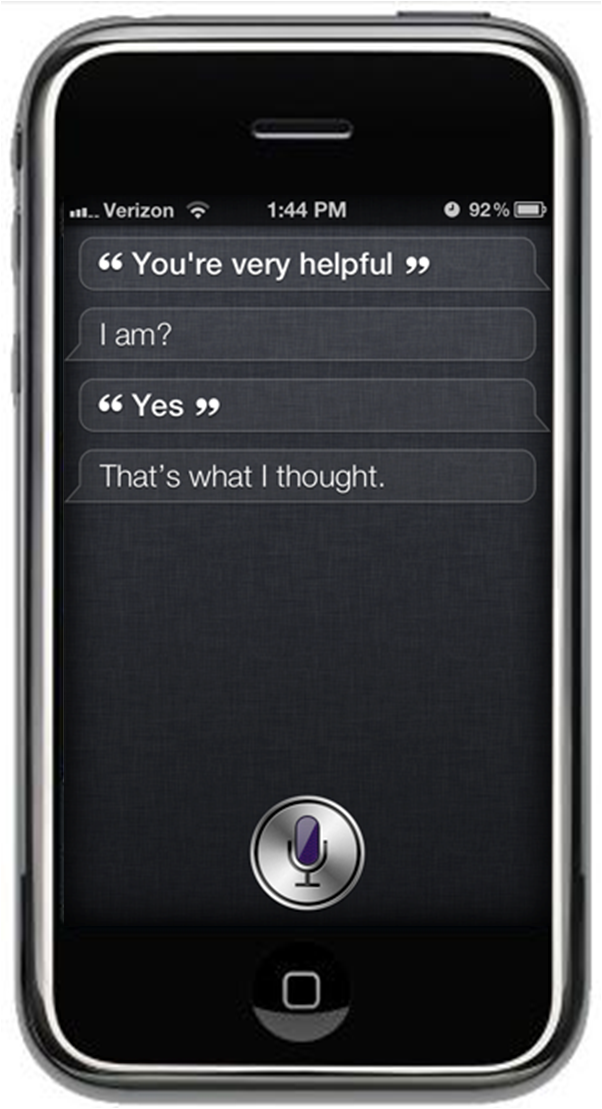
Siri: My Bank 2.0 Concierge

The introduction of Siri as the star feature of the new iPhone 4S already appears to be setting the stage for a major change in the way people interact with their phones. By combining insight reminiscent of IBM super computer Watson and the voice of a willing assistant, marketers from all industries can leverage this technology to simplify the way we complete tasks with voice commands. There is no doubt that Siri's introduction represents the mainstreaming of voice recognition and natural language interface in much the same way that the introduction of the iPad mainstreamed tablet computing.

Siri represents something of a paradigm shift in how we will interact with mobile devices going forward, and there are few places where this movement from keystroke to voice command will impact business more than banking. While today's voice technology in banking does fairly well in being able to recognize basic transaction commands and process rudimentary transactions, leveraging the technology and humanized tone of Siri and similar programs will allow banks to process an endless array of interactions seamlessly from the convenience of the phone.

Much like you would use a hotel concierge to ask various local-themed questions, imagine a world where my future banking concierge based on Siri technology will be able to work on my behalf and answer questions such as:
  • Where is the closest ATM where I won't have to pay a fee?
  • Where is the nearest restaurant with an NFC enabled payment device?
  • Please transfer $600 into my checking account from my money market account and make my mortgage payment at XYZ bank.
  • When will the most recent deposits I made clear?
  • Are there any merchant-funded reward offers that I am eligible for at Southfield Mall?
  • Where is the closest branch with Saturday hours (assuming I would ever need to visit a branch)
What is nice is that my future banking concierge would process all of my questions with the pleasant nature of my current GPS system, listening intently and not getting frustrated if my question seems trivial or repetitive. In fact, the intelligence behind applications like Siri would get more intelligent over time and evolve based on my behavior. And instead of receiving a link, search box, application or an ad, I will receive a verbal confirmation or a direct answer.

Leading banking organizations will most likely also find a way to allow me to open a new account without ever picking up a pen, typing in personal information or meeting a new account representative face-to-face. By taking insight already available within my mobile applications and various social media sites I use, my banking concierge could easily fulfill the requirements for establishing a new account whenever I desired. This capability will obviously hasten the potential reduction of vast branch networks.

While Siri only works with the iPhone 4S, alternative voice recognition applications like Vlingo (available on Android as well as iOS devices) and Nuance (which recently acquired Swype) will definitely benefit from the re-introduction of Siri by Apple as well. In fact, last week, Boston-based Vlingo saw activations increase by 50% daily, according to GigaOm at a time when usage overall has skyrocketed.

Source: PC Magazine, October 17, 2011
The key to success of Siri and other voice applications is the natural language interface, or the ability to add context to words spoken that enable the application to figure out what the user wants to do. That requires a semantic engine and artificial intelligence that continually gets better over time. In the banking world, however, the combination of transactional processes and questions are comparatively simple. In addition, with the heightened competition for the best interface, the capabilities of these systems will continuously improve while the investment needed to leverage these capabilities will become less.

Do you think Siri and related applications will be integrated into banking by legacy financial organizations? Will the integration be fast enough to fend off the new entrants into the industry such as BankSimple and MovenBank or even current online banking providers such as Ally?

I would love to hear your opinion.

Saturday, November 2, 2013

Benefits of Social Media Sign-In Must Offset Privacy Concerns

One of the most important yet tedious components of opening a new account account at a bank is completing the new account form. Whether done at a branch or online, the new account registration process is the first (and sometimes only) time when a bank can learn about a customer's needs, behaviors and expectations of the relationship.

Unfortunately, this process has changed very little over the years and is usually only comprised of gathering the most rudimentary of information from the potential customer (name, address, phone, social security number, account type desired, etc.) and collecting funds/obtaining a signature. The rationale for only collecting the most basic information has been to balance the desire for insight with a respect for the customer's time. This balance becomes even more important in the online world, where a customer can easily abandon the account opening process with little repercussion.


Online Account Opening Abandonment
According to a recent report from Javelin Strategy & Research entitled, 2011 Online Account Opening: Faulty Process Hobbles FIs in the Battle for Customer Acquisition Profitability and Retention banks lost close to $1 billion and 5.8 million customers due online abandonment during the account opening process over the past year. In fact, it was found that only 53% of new account applicants were able to successfully open and fund their new accounts. While some may later go to a branch, many new customers may be lost forever.


The research underscored the importance of delivering a fast and relatively simple account opening process for online/mobile consumers. "Most people open accounts online because they expect it to be faster and more convenient than doing it over the phone or visiting a branch," says Mark Schwanhausser, senior analyst with Javelin. To succeed, Javelin outlined two primary areas of focus:
    • Reduce abandonment rates by focusing on usability and simplicity to minimize points of friction.
    • Reduce rejection rates for qualified consumers by upgrading and optimizing identity and funding verification.
The research from Javelin is reinforced by research done late last year by Blue Research on behalf of Janrain that found that three out of four web users would rather leave a website than complete a registration process. Among those that would complete a brand new registration, 76% said they would give false or incomplete information. 


This creates an interesting dilemma for banks where every new online and branch based customer could be worth hundreds of dollars in annual revenue and where understanding the new customer is paramount to an enhanced customer experience. On the other hand, the information collected needs to be accurate.

Social Sign-In (SSI) as a Potential Solution
Social sign-in could provide a viable and highly profitable enhancement to the traditional new account opening process. With a single click, anyone who has already registered on Facebook, LinkedIn or most other social networks could have a significant amount of required information transferred to the new account form in addition to insights associated with the social network.

"With social sign-in, there is greater engagement and companies have access to richer profile information because the data elements collected on social networks are more extensive than what firms usually request from customers," states eMarketer principal analyst Jeffrey Grau in his report Social Commerce: Personalized and Collaborative Shopping Experience. When a consumer gives permission to access personal (or business) data on Facebook or another social network, the bank can see more about what these people like and their interests. And the insight can be updated over time as opposed to traditional collection techniques where the insight goes stale.

While banking is definitely different than retail from a consumer's perspective of need for privacy, two-thirds of respondents to the Janrain study preferred social sign-in to completing an entirely new registration form. Interestingly, according to Forrester and Nielsen, the people who preferred social sign-in were also more valuable as consumers and more likely to be active on social networks.


"Consumers are frustrated with the traditional online registration process and will favor brands that make it easy for them to be recognized . . . the rapid growth of social media has dramatically impacted consumer's expectations of websites . . . ," states Paul Abel, Ph.D, and managing partner of Blue Research.

Social sign-in is not unfamiliar to people who use the web regularly. According to recent statistics from Janrain, Facebook is the most popular choice for sign-ins, used by 39% of consumers, with Google being ranked second with 30%. Even Twitter is used by 8% of the respondents even though this network is used to share 32% of the content.


Movenbank Social Sign-In
While still in the start-up (Alpha) phase, Movenbank is requiring it's first members to register and log in using Facebook. Over a breakfast with Movenbank founder and Bank 2.0 author Brett King a few weeks ago in Chicago, Brett mentioned that the current method of new account application is outdated in today's highly digital environment.

"A customer doesn't want to sit in front of their computer or on their phone completing lengthy forms. A social sign-in provides an easy way for the customer to start the process while providing us more (and probably more accurate) information," said King. He added that he has found no regulatory stipulation for the traditional signature card, and that there would be instant cross referencing of traditional databases (possibly credit bureau data) to help solve identification issues.


Of particular interest to King and Movenbank is the enhanced level of insight provided through the integration with Facebook (and eventually other social networks such as LinkedIn and Twitter). With this insight (and the completion of a relatively short survey), Movenbank can create a 'Financial Personality'. According to King, the intention is to provide a unique customer experience where financial solutions can be developed based on the customer's behavior and lifestyle.

Social sign-in also provides the opportunity for social sharing beyond the 'liking' of a product within a social network. By connecting friends that are using the same social channel (with their permission) people can interact, share experiences and potentially even be involved in the product development process. In my breakfast with Brett King he mentioned the possibility of customer panels that can digitally interact and make the Movenbank experience 'richer'.

Security and Privacy Concerns
Along with almost any discussion around social media and banking come security and privacy concerns. How will the bank (or retail site) use my personal information on Facebook or another social sign-in site? How will my information (and identity) be secure? 

Movenbank addressed some of the concerns in a recent blog post stating that Facebook would not be the sole source of information used for setting up an account or determining your needs. In addition, the customer would control what insight is collected and shared. As Finextra stated in a recent post dealing with the issue of security, Movenbank (and others) need to tread carefully when accessing personal data.

Consumer concerns are evident in the comments to a recent blog post in the Harvard Business Review by Larry Drebes, founding member of the non-profit OpenID Foundation and CEO of Janrain. While his blog post is definitely a bit biased towards the benefits and growth of social sign-in, the comments of readers illustrated the sensitivity of people around privacy and the return they need to get for the sharing of their social history. One reader stated, "Marketers are digging the hole for the intelligence community's future mass data-mine, and ordinary people will get the shaft". 

Probably the best response to the HBR post was from a gentleman who stated that each time he is asked for a social sign-in, he needs to balance the benefits with the potential 'risks'. He stated, "Over the past few years , online offerings have become increasingly rich and complicated. I am a heavy consumer of online services and have used social media sign-ins on a number of occasions, Any time I am faced with logging in, I have to look at; 1) The cost in time and effort of completing a new registration, and 2) The value of my information I am asked to ante up". He continued, "My hypothesis is that the entities that are offering social sign-ins right now are more sophisticated in the social space and realize there is a fundamental shift in the way businesses interact with their customers online.

To help alleviate some of the public's concern over both privacy and security of information associated with social sign-ins, the National Strategy for Trusted Identities in Cyberspace (NSTIC) has been established by the White House to improve on the password and log in process on the web. This organization is a collaboration of both private, public and consumer organizations established to develop a common 'Identity Ecosystem that benefits all constituents.

Whether social sign-ins are a 'data capture deal changer as presented by Loren McDonald from Silverpop in a recent blog post or a non-starter as some will profess, it is clear that the sharing of personal information is a value exchange between the potential customer and the business/bank. If a clear value enhancement proposition is not offered in exchange for the insight (or social network) requested, we will be relegated to traditional data collection with the inherit application abandonment that is costing our industry billions of dollars and millions of customers annually.

I would love to hear your thoughts on what Movenbank is doing with Facebook sign-in integration and on the concept of using social sign-ins to enhance and streamline online new account opening. I would also love to hear what enhancements to your current product solutions could be provided with the enhanced insight collected?

Thursday, October 31, 2013

Banks Need to Collect More Insights to Communicate Effectively


By Bob Williams, Director of Marketing Technologies at Harland Clarke and author of the blog, The Merchant Stand.
A friend and colleague Jim Marous shared an article from American Banker on Googe+ entitled Banks Underuse Mobile for Communication. The article discusses challenges that financial institutions have with communicating with their customers through mobile devices. While mobile device applications and mobile optimized sites are becoming more common, and expected by account holders, financial institutions are not using the mobile channel for proactive communication. Kael Kelly, senior director at Varolii is quoted in the article “Banks don’t have the data that they need. A lot of the phone number data doesn’t easily distinguish between a mobile number and a land-line.”
So the idea that banks don’t know what data they have made me think about some other data that Jim Marous shared about financial institutions and customer data. Like this tweet about banks not having email addresses for their account holders.
The challenge I see is missing or unintelligible customer profile data. That problem expands beyond the boundary of the financial services industry. It’s really a common need for any type of business. Another challenge is the misuse (or lack of use) of the data that an organization has. Another conversation with Jim last week revealed that he noticed his bank mention that online banking was 'down' using Twitter. While admirable that they used a more modern social media tool for this notification, there probably aren't many people following Twitter the way Jim does. Making matters worse, they didn't use either his email address (which is tied to his online banking account) or SMS (the bank has his cell phone) to make this notification. In other words, the bank had the tools, but didn't use what was at their disposal.
There’s no doubt that many organizations have a good process to manage customer profile data and communication. But for those that don’t, I believe there is a fairly simple solution.
A Simple Multi-Solution for Collecting Profile Data
The first step is to collect accurate information at the time of new account opening. That seems obvious, but for many businesses this may require updating the customer/client profile record to support addresses for current communication mediums. That means distinguishing between phone number types such as home, mobile, work etc. It means a place for an email address as well. If is it a business, you may also want to include a variable field for social media type contact information. At a minimum, require one phone number and one email address. If the customer insists they do not have an email address, then fill the field with an agreed upon standard such as (noemail@yourbusinessdomain.com)
I understand there are regulations governing anti-spam communications via email and SMS text. But I don’t think banks or other businesses need to over think/engineer a basic solution to keep accurate profile data.  The email and phone number should be required and make sure the customer knows when they establish the account that you may use this information to contact them with important notices about their account. You can optionally create a permission indicator (opt-in) that is designated for future marketing or non-marketing communications. While these changes may require IT, online banking and branch management support, the customer experience and cost benefits are significant.
A Simple Multi-Channel Solution for Keeping Profile Data Accurate
I suggest sending notifications through multiple channels annually for customers to check and update their profile contact information. Here are some possible touch points:
      1. Pop up in the online account area after login.  Remember, customers are in your system by their own choice. So this is a fair message to display to them regularly. This is also an area where the customer can self-serve any updates they need to make.
      2. Email reminder. Don’t ask the customer to login from the email message or reply to it. That’s a technique used by phishing attacks and creates mistrust. Rather, use the email to notify and request the customer update their profile information the next time they login to their online account or the next time they visit a branch/store location.
      3. Post the reminder message on Facebook/Google+/Twitter and other social sites where customers may follow your brand for the purpose of receiving communication. These social medium platforms are broadcast platforms. You don’t need permission to place messages there and customers that see a message from your account page are there by their own choice.
      4. Leverage the ATM. While some ATMs are equipped with interactive communication options, the ATM can at least be used as a reminder tool. Of maybe use a QR code on the ATM for customers to go to a log-in site for updating.
      5. Put the reminder message in a recording for customers holding for live assistance. It’s a simple reminder that they should keep their profile information up-to-date to help with important account notifications.
      6. Have any branch/store employees verify with customers on a designated week (quarterly or annually) that their information is up-to-date information. This only covers the customers that are serviced in-person for that week, but it’s a great touch point for interaction and shows that your brand is proactive to keep good records. Branch POS material can also emphasize the need for updated information.
      7. Messaging on all statementing and promotional materials. Emphasizing the 'green' aspects of keeping all communication channels up to date makes this a priority all year long.

Since some customers may have fees associated with SMS texting, it’s not advisable to use that channel unless you have established that as part of their profile setup.
The email channel is different in this multi-channel approach because it is a message to an individual area. In fact, email addresses that are not accurate may return as undeliverable. Consider monitoring undeliverable emails and putting these customers on a list for follow-up through other means such as phone or postal mail.  Alternatively, remove email addresses from the profile record if they are not deliverable after three attempts.
What do you think? Should it be difficult to keep accurate profile data and request the customer update/verify it with recurring frequency? Do you have a process or program at your organization that has worked? I would love to know.

Big Data Provides Big Opportunity for Bank Loyalty

In a new regulatory environment, banks are faced with changing the foundation of rewards programs that were previously funded by interchange income from credit and debit cards. With debit interchange funding gone, FIs still need to continue to find ways to improve bank loyalty and drive the desired card behavior. In addition, banks need to leverage “big data” and mobile payments in the hope that they can replace some of the revenue lost as a result of Reg E and the Durbin Amendment.
Optimally, the future of rewards and loyalty will allow banks and credit unions to take advantage of the “Loyalty Trifecta” (my term for bringing together the benefits of 1) payment and transactional insight, 2) targeted offers and personalized communication as well as 3) mobile offers and payments).
To get an insider view of the challenges and opportunities available to banks today in the area of rewards and loyalty, I reached out to the leaders of four companies that provide unique solutions to the banking industry and who also will be co-panelists with me at the upcoming BAI Payments Connect 2012 Conference & Expo in a session entitled “Rewards in a Mobile Banking Environment.” 
Thanks to Tom Beecher, CEO, Cartera Commerce Inc.; Rob Heiser, President and CEO, Segmint; Schwark Satyavolu, CEO, Truaxis; and Rod Witmond, senior vice president, Product Management & Marketing, Cardlytics Inc who agreed to participate in the panel and contribute to this interview.
Note: An abridged version of this interview is also located as a BAI Banking Strategies article entitled, Big Data Drives 'Loyalty Trifecta' for Banks.
Q: What’s the current status of the banking rewards environment today and how can it be improved upon?
Witmond: Previously, U.S. banks brought offers to customers in a separate section of the bank website – often referred to as an “online mall.” Only a small percentage of their customers went there. It was not a loyalty solution. Various bank rewards solutions required the customer to enroll their card at a separate site and then hope they remembered to shop at a group of merchants providing lackluster discounts. Low engagement or difficult-to-use approaches won’t strengthen a retailer’s relationship with customers or move the needle on sales – for the merchant or the bank.
The banks’ business cases for the early generation, merchant-funded rewards programs promised significant earnings to the banks driven by large revenue shares. For the reasons stated above, retailers did not see these solutions as adding value to their current marketing mix and budgets did not shift. U.S. banks ended up with a big piece of a very small pie. New enhancements from loyalty vendors have refined the early approaches on several fronts.
Beecher: The scope and strategies for banking rewards have changed dramatically in the past two years. Durbin has forced banks to re-imagine how loyalty programs are designed and funded. Also, the development of card-linked offers – where consumers earn cashback or points when using their bank’s payment card at participating merchants – has opened up new incremental revenue opportunities for banks. Finally, the growth of Groupon and deals in general has made consumers (and banks) much more aware of the power and importance of local merchants and online offers.
Satyavolu: Most banking rewards in the past had four defining aspects: 1) they were mostly available on credit cards and less frequently on debit cards (due to being funded by interchange from merchants); 2) they were mostly one-size-fits-all (everybody gets the same extra points/cash-back on certain categories whether or not you shop there); 3) they were typically limited to cash-back or points back benefits; and 4) merchants were not involved in the creation of these benefits.
Heiser: The way FIs interact, engage and communicate is driven more and more by their customers’ technological lifestyles. While merchant-funded reward programs were one of the first to react to this shift, success today involves the application and technology adoption that is driven by transaction intellect − knowing and understanding the needs of customers.
Q: What are the benefits of your solution (from both a bank and consumer perspective) compared to rewards programs used by banks in the past?
Whitmond: While most rewards programs in the past used a points currency to reward based on the number and/or level of transactions, we now can leverage all of the banks electronic transaction data to isolate customers into finely defined segments. By leveraging purchase transaction data, we enable retailers to invest aggressively to grow their business. Bank customers receive 20% when they shop at new retailer, not 1%. And since the customer is receiving these rewards as part of their online banking experience (where the customer is viewing their relationship 9 times per month and 25% view their relationship daily), retailers realize that customers interact with their offers over a 100 times more than with other digital channels!
Beecher: Instead of the bank funding the rewards program as in the past, merchants pay for the card-linked offers and also pay a commission on the sale which turns into revenue for the bank. Therefore, the bank gains a new incremental revenue stream, and increases customer engagement and card spend. Because Cartera runs these programs as a fully managed, pay-for-performance service, banks can launch and innovate quickly and at low cost. In addition, instead of the customer needing to visit a rewards site to select their gift, redeeming card-linked offers is as simple as swiping their payment card at the participating merchant. The reward is automatically added to the customer's account in the currency set by the bank.
Satyavolu: Due to the advanced analysis of robust transaction data (within the bank's firewalls), the merchant is willing to provide much richer rewards to the customer than they could in a normal online coupon based environment. They already know the customer is 'qualified', therefore a greater incentive can be offered. In addition, while there are national merchants involved in the program, the bank can include local merchants as well which can build a strong bond with a bank's small business and commercial customers. Finally, unlike previous rewards programs that are simply based on transaction levels, today's rewards are much more personalized with the selection of offers being improved as the customer engages in the program. This drives a higher degree of online and mobile engagement with 35% higher login rates.
Heiser: As opposed to being a program based on rewards, Segmint leverages digital marketing technologies to help FIs acquire, cross sell and retain bank customers through dialogue marketing. Our program is driven through the micro-targeting of bank customers and assigning of Key Lifestyle Indicators (KLIs) - unique identifiers based on individual spending patterns and lifestyle trends. If customer engagement is the primary goal, then FIs ability to use KLIs to understand bank customer life events and deliver a comprehensive set of relevant FI products and services is ultimately a win-win for both sides. With today’s savvy consumer expecting to receive highly-targeted and engaging information, this meets their growing demand for personalized service and simplicity.
Q: How can a bank 'customize' your solution to differentiate itself in the marketplace?
Whitmond: Banks have numerous ways in the user interface to design a solution that is completely integrated to their specifications. This not only differentiates our solution from others in the market, but also from other banks that may have installed our solution. Second, because the Cardlytics solution is software loaded onto hardware that is in the bank’s environment, the bank has complete control over the targeting solution. This also means the bank has complete access to any - and all - relevant data fields. As such, the bank has complete control over designing and deploying solutions around the rewards program. This has resulted in customized email, SMS, mobile and social solutions.
Beecher: Cartera programs are private-labeled and customizable for each of our bank partners. Each bank can control the program construct and currency (e.g., cashback, points) , marketing strategy and messaging, merchants and offers to include, consumer experience, and marketing channels to use. Cartera supports the full range of options with technology and services and allows each bank to launch and run a distinct, differentiated program.
Satyavolu: StatementRewards provides each FI access to a web-based dashboard where they can control the nature and quantity of offers their customers will receive. Some of the unique features of our solution include merchant-level purchase insights, geo-aware services, cross-sell capabilities, social networking distribution (customers can share rewards on Facebook and Twitter and brag about their loyalty status level as they shop), gamification (reward discovery incentives), and bill analysis (allowing customers to receive personalized, recommendations to help save money on monthly recurring expenses like wireless, TV service and gas).
Heiser: Data-driven CMOs can utilize Segmint’s analytics engine, instantly-actionable campaign management tool, and ad delivery platform for the micro-targeting of bank customers and to initiate and manage customized experiences. Whether a mix of FI products/services or bank partner offers/discounts, Segmint's solution helps FIs initiate interaction and generate real-time offers when it is the right time for the bank customer. Segmint’s solution also provides unparalleled speed-to-market and comprehensive metrics – ultimately resulting in optimization of marketing spend. 
Q: How can your own solution be leveraged in a mobile environment as opposed to an online banking or bricks and mortar environment?
Witmond: The Cardlytics solution is already leveraged in a mobile environment. We have bank solutions for SMS, mobile, and email in the marketplace. Additionally, we have ATM and social media solutions close to deployment. Most banks start with online banking because it provides the greatest exposure to the rewards platform. However, they quickly recognize the value of extending into mobile applications where they have complete control over the data and data fields. As such, they can drive mobile solutions at their own speed. Where a bank cannot deploy a mobile solution quickly, we offer a white-label mobile solution that can be deployed alongside or within an existing FI application.
Beecher: Mobile is an increasingly important channel for communicating with consumers -- particularly with the growth of in-store (national and local) offers. Cartera powers mobile apps that show consumers where they can use their payment card to redeem card-linked offers from nearby merchants. As Cartera partners roll out support for mobile wallets, this capability will become even more powerful by enabling consumers to find and redeem offers entirely via their smartphone.
Satyavolu: Truaxis’s StatementRewards product easily integrates with a FI’s existing mobile banking app to provide additional benefits to banking customers. Through the existing mobile app, bank customers will be able to view all of their rewards, both purchased and available, via the user dashboard. From this user dashboard, customers can instantly view, purchase and redeem rewards directly while they’re on the go.
Heiser: Segmint is not a merchant-funded rewards provider and, as such, our philosophy is grounded on generating loyalty through digital engagement with customers. Segmint is device-agnostic and can deliver across virtually any electronic medium. There is no doubt that opportunities exist within the mobile environment, but as with all mediums/channels, success revolves around the actual content delivery.
Q: What innovation do you see on the horizon around loyalty and reward platforms, both in banking and non-banking industries, in terms of leveraging social media?
Witmond: We have banks that have already designed how our solution can extend into social media and are deploying the same. The challenge with social media is that it is a “social experience” all about engaging on a person-to-person basis. That being the case, the extension of the core platform into social is only the first stage and the true challenge is in making the rewards solution one that engages on a person-to-person basis.
Beecher: Innovations in payments, big-data-driven marketing, and loyalty are all merging together to form what will ultimately be a new playbook for companies in these spaces and a new set of winners, including the new card-linked offers space. Mobile payments are seeing new non-banking entrants, all realizing that the incorporation of offers into the wallet is central to consumer adoption.
One of the new frontiers of leveraging big data with marketing is anonymous payment data, where new technologies and entrants are helping banks use transaction data that preserves privacy and provides real benefits to consumers. An example would be my purchase at McDonald’s alerting Burger King to make an offer to me. The entire funding model for bank loyalty programs is being turned on its head with merchants paying consumers through banks to shop with them rather than banks focused on taking money from merchants (through interchange) and then funding rewards themselves.
Satyavolu: The biggest innovation for these platforms will be the continued use of data to drive personalization and cut-costs. Both banking and non-banking industries are sitting on piles of data that they both don’t have the resources to utilize and if they did, they wouldn’t know where to begin. By working with third-party vendors like Truaxis, these companies will finally be able to utilize this data through innovative new techniques.
Analyzing transaction data from FIs is only the tip of the iceberg. As these platforms become more integrated across multiple channels and industries, companies will be able to understand and connect with their customers to provide them with the most value and ensure that each customer has a completely personalized experience that provides them with exactly what they need and want.
The data buried in social networks adds an interesting new twist to the personalization capabilities that are made possible, when you add them to the transaction data streams that FIs already have today. The concept of loyalty marketing will undergo a quantum shift in how it operates and who is in the key enabler seat for merchants, where FIs have a huge opportunity and upside to facilitate these interactions.
Heiser: Social media is a huge game changer for FIs and will become the “biggest bank branch” they operate. With nearly a billion active monthly users on Facebook, FIs must become socially actionable and interact with customers in their channel of choice. Last year Segmint introduced SegmintSocial, our social media technology solution that gives FIs the power to precisely identify their customers on the bank’s Facebook page, customize their experience and engage them in real-time, personalized dialogue.

EMBARKING ON A NEW ERA FOR BANK LOYALTY
We are obviously entering a new era for bank loyalty and reward programs, where banks can leverage transactional and payment data to build a personalized engagement process. Whether the program includes merchant-funded offers or simply uses customer insight to drive greater share of wallet and retention, banks can significantly improve the value of the relationship from both the customer and bank's perspective.
Since we are treading on new territory regarding the use of customer insight, there may be consumer push-back at first as they see rewards/ads integrated on their online banking statement, ATM screen or even their phone. There will be tests of geo-locational marketing with many of these reward program in the near future, where customers may receive their offers via an email or SMS message as they near a participating merchant. 
The potential payoff for this new level of engagement is significant, however. According to recent Aite Group research entitled, The Case for Merchant Funded Incentives: New Opportunities for Card Issuers, merchant funded incentives could drive US$1.7 billion in annual revenue for card issuers by 2015. In addition, the number of U.S. cardholders (credit, debit, and prepaid) who subscribe to merchant- funded incentive programs could exceed 460 million by 2015.
“Merchant funded incentives programs are a good deal for card issuers, and offer a new revenue stream,” says Madeline K. Aufseeser, senior analyst with Aite Group and author of the report. “Because the cost to operate merchant-funded incentives is less than that of traditional reward programs and will generate a greater profit per account, card issuers will most likely consider swapping some existing traditional reward programs for merchant funded incentives programs, especially on debit portfolios.”
It is definitely a time of change for loyalty, and a time when marketers will be armed with significantly more customer insight to build marketing programs. Rewards and loyalty programs only scratch the surface of opportunity available to savvy bank marketers who can make use of 'big data'.
Is your organization considering or already implementing a new rewards and/loyalty program? How will you engage your customers to participate? Will you 'localize' your program, including local merchants? Will you leverage social media to enhance your customer profiles or help market your program. I would love to hear from you.